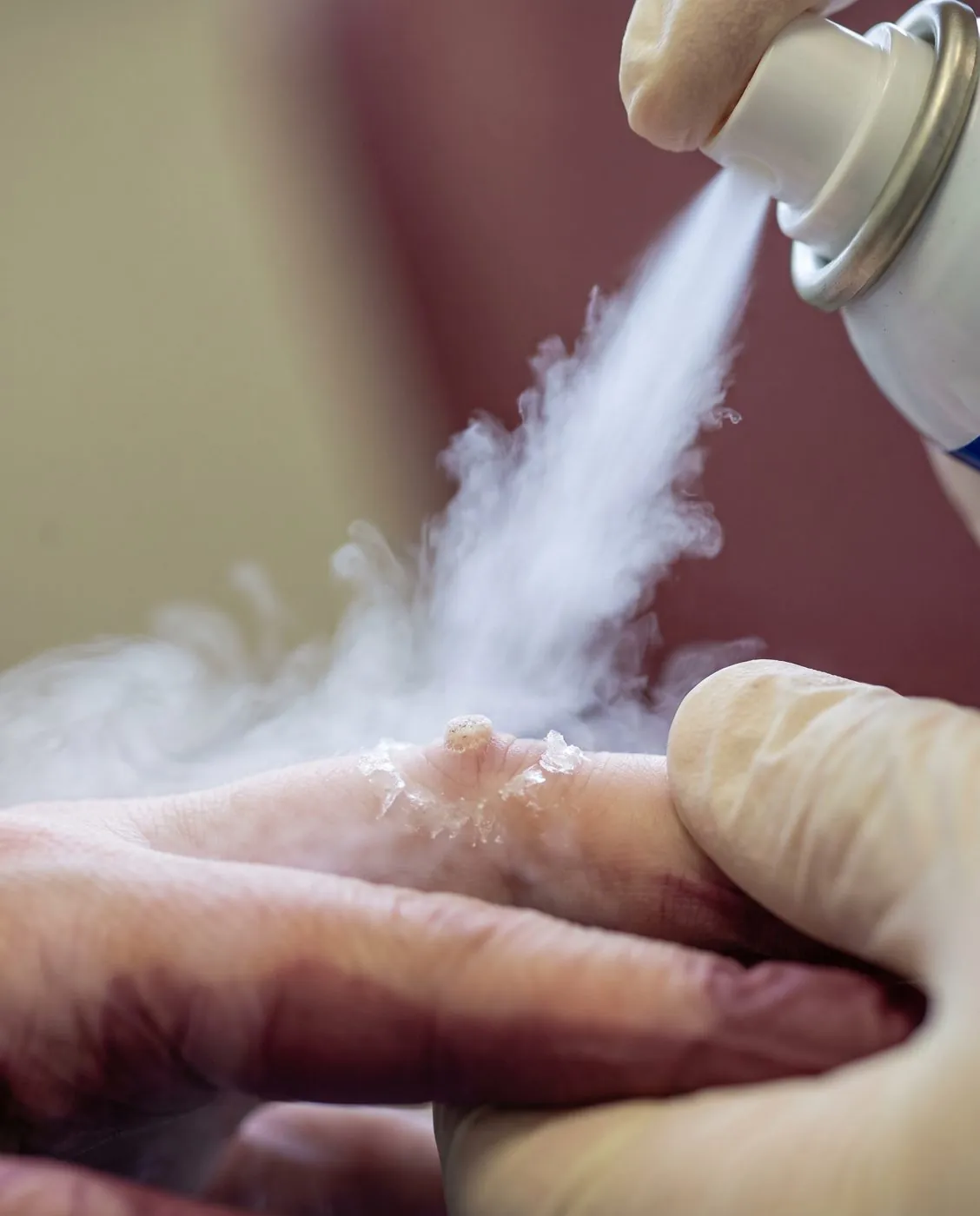

Cryotherapy is a type of physical therapy using cold: it lowers the temperature of the skin and the tissues beneath it. Cooling to low temperatures for a few minutes causes strong vasodilation, and therefore an increase in blood flow that prevents circulation from being blocked. At the same time, the cold acts on the nervous system, paralysing the nerves, so to speak, and thereby inhibiting the transmission of pain. This explains the analgesic effect, which helps to combat inflammation, trauma and muscle pain. The low temperature, and the speed with which it is reached, depend on several factors: the method used, the starting temperature, the time spent on the skin, and the thickness of the subcutaneous fat. The longer the application, the deeper it acts. It is widely used in dermatology. Cryotherapy with liquid nitrogen is a dermatological method indicated for the non-invasive treatment of skin lesions of various kinds, from viral to neoplastic. The technique consists of applying liquid nitrogen (−190°) to the skin with a swab or spray. This brings about the gradual but complete and not very aggressive healing of the lesions, because low temperatures beyond the freezing threshold selectively destroy them while sparing healthy cells, which are more resistant to thermal shock. To solve the problem a single application lasting a few seconds is usually enough, though it can be repeated depending on the nature, size and thickness of the lesions to be treated. Cryotherapy is contraindicated in the presence of: hypersensitivity to cold, sensory disorders, open wounds, skin blisters and disorders of arterial circulation, acrocyanosis and Raynaud's phenomenon.
It is used to treat condylomas, warts and other skin lesions.