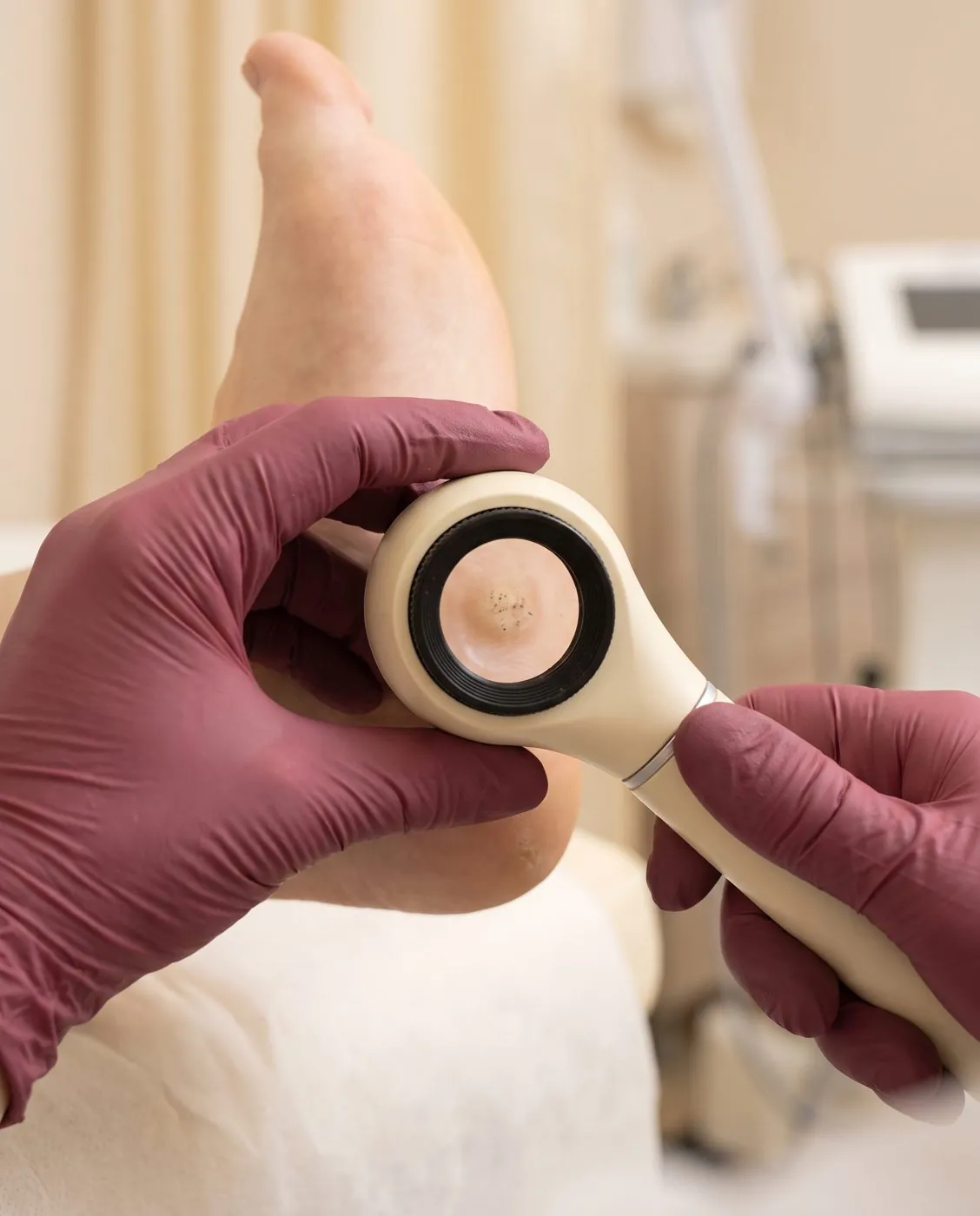

A wart is a skin growth caused by the human papillomavirus (HPV, short for Human Papilloma Virus), of the Papovaviridae family. Warts are benign growths made up of an inner core of tissue fed by blood vessels and covered by several layers of epithelial tissue. The virus penetrates the epidermis and infects it, causing it to replicate too fast. Contagion occurs through superficial contact (so the virus remains confined to the skin and is not present in the blood), usually in very busy places such as showers, gyms and swimming pools, where the warm, humid climate helps the virus survive in its active form. Without these environmental conditions the virus does not survive long outside the layers of the skin. A wart can develop in any part of the body, but often affects only certain specific areas (such as the hands, feet, elbows and knees) which, being subject to frequent mechanical trauma and contact with the outside environment, are likely to have micro-lesions in which the virus can lodge. The appearance of the wart varies depending on the part of the body affected and the viral strain (there are many viral strains) that caused it; we therefore distinguish common (or vulgar), plantar, flat, filiform warts and so on.
Common warts are the same colour as the skin. They are generally recognised by their typical rough, often crinkled and unsightly surface.
Plantar warts appear only on the sole of the foot and normally interrupt the pattern of lines and ridges on the skin that make up the footprint. For this reason, and because they may contain small dark dots, they cannot be confused with plantar calluses. These dots are nothing other than microthrombi formed as a result of the stretching of the papillae. Warts of this kind tend to be softer, flat, covered with callus and painful because of the pressure exerted when walking. The HPV phenomenon has never been the subject of in-depth methodical studies: for this reason, until recently no therapy was known that could guarantee a complete cure. The most authoritative medical journals state that no treatment has a success rate above 73%. A key role is also played by the placebo effect, which stimulates the immune system.
A molecule has recently been discovered that makes it possible to treat the HPV virus, including in its external skin form. The drug produced is called Cidofovir, and it is a powerful broad-spectrum antiviral, even more effective than Aciclovir (which is ineffective against the HPV virus).
Cidofovir is used mainly in people with immune system problems (such as people with HIV) in its liquid form for intravenous use, but formulations for external topical use (ointments) are also being produced, which unfortunately are not yet widely available in Italy.
The treatments currently used are the following:
- Surgical removal: this consists of removing the whole affected area of skin. The wound caused by the scalpel heals but a more or less evident scar remains. Given the likely recurrence of the wart, this method is used less and less.
- Cryotherapy: this consists of freezing the affected area with liquid nitrogen, applied locally with a cotton-wool swab or sprayed from an aerosol can. In this way the burned cells of the dermis form a blister and detach from the underlying tissue, allowing the epidermis to regenerate; the wound must be treated like a burn and protected from infection.
- Keratolytic preparations: a liquid based on salicylic acid, lactic acid, elastic collodion or a combination of the three is applied. This type of drug speeds up the maturation cycle of the wart, bringing it to the surface and allowing it to come off on its own.
- Intralesional injections: these consist of injecting interferon into the wart itself. This process kills the virus by interrupting its cycle.
- Laser: this consists of burning the wart with a laser.
- Vitamin E application: vitamin E, in oily preparations also used as an anti-irritation skin cream, applied locally leads to the death of the wart, probably by improving the ability to heal.
- Fig latex: this consists of applying to the wart the latex that flows from a freshly cut leaf, fruit or twig of the fig tree. Some people recommend covering it with a plaster once dry, given its strong photosensitising action.
It is true that warts multiply in the neighbouring affected areas (but also at a distance) by autoinoculation, but the popular belief that a mythical "root" must be removed to stop the wart "growing back" is to be considered false. In fact the wart does not penetrate deeply, but is limited to the epidermis and dermis.