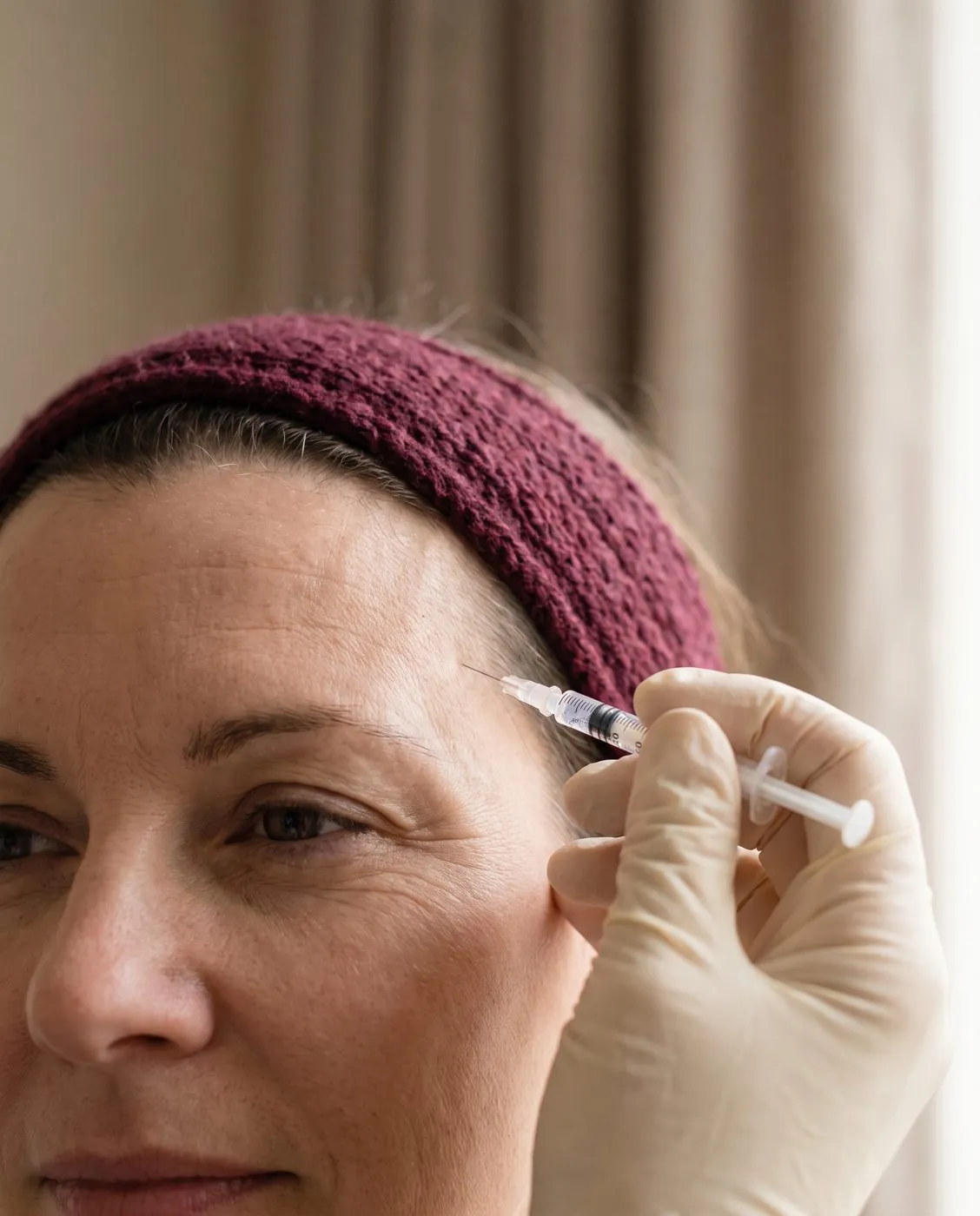

The most significant and visible sign of the passage from youth to old age is the appearance of wrinkles on the face. If we consider the association of the concept of beauty with youthful-looking skin, the importance of appearance in today's image-conscious society, and the tendency to marginalise the elderly from active society, we understand how important it can be for individuals to "exorcise" ageing by trying, first of all, to solve or lessen "the wrinkle problem". We can define a wrinkle as a permanent linear furrow of the skin, of variable depth.
Wrinkles form in certain regions of the body, above all where the skin is constantly stressed by the action of the underlying muscles. The area par excellence is the face, where, besides wrinkles due to ageing, there are also expression lines. When judging a person's apparent age our brain certainly also takes into account the roughness of the skin, but this can happen only up close, when precise visual information arrives. This reflection alone is enough to understand that other details are what the mind processes and associates with the concept of age. If we watch an elderly person from twenty or thirty metres away, we will probably judge them to be of advanced age even if we cannot make out their facial features completely. This tells us that the most important factor linked with the objective sensation of old age is a person's posture and movement.
They can be divided into 2 categories:
- Wrinkles and lines from facial expression ("expression lines"). They are due to the depletion of the supporting structures of the dermis: collagen, elastin and hyaluronic acid. Ageing is not the only cause of these blemishes: in relatively young people, facial expression too, that is, stress induced by the underlying facial muscles, plays a part.
- Wrinkles and lines due to ageing, accompanied by sagging of the facial profile. They are due to the decrease in skin elasticity and tone. They occur above all in the brow ridges, the cheekbone area, around the mouth, along the jawline ("jowls") and on the lips.
Causes and prevention
Skin ageing, at the root of the phenomenon of wrinkles, depends on various factors: besides genetic ones, external agents also influence the appearance of wrinkles, such as exposure to the sun's rays and ultraviolet light without adequate protection, stress and worry, smog, poor diet and a disorderly lifestyle. Wrinkles can also form after overly rapid weight loss.
To prevent the formation of early wrinkles, it is important to take care over your diet, eating plenty of fruit and vegetables and drinking at least 1.5 litres of water a day, to sleep enough to encourage cell renewal, to avoid smoking and limit exposure to the sun or sunlamps, to keep the skin clean so that it can breathe, and to use good cosmetic products to nourish it deeply. Anti-wrinkle creams give the skin the nutrients it needs to stay young and elastic and are an excellent aid in preventing and lessening wrinkles.
Wrinkles, then, are folds or lines, generally very unwelcome, that form on the surface of skin made dry and inelastic by the relentless passing of time. The first type of wrinkle to appear, often at a young age, is the so-called "expression lines". Little liked by women, but often appreciated on men's faces, they are due to the repeated contraction of the superficial muscles, used – often unconsciously – to express emotions. The classic places where they appear are the forehead and around the eyes (crow's feet).
Sometimes these wrinkles can lessen or even regress spontaneously when the state of mental reactivity that produced them ends; more generally, however, they tend to become gradually more pronounced as time passes, favoured by every new and inevitable contraction of the facial muscles.
Not by chance, women who wanted to prolong their youth were once advised to avoid excessive displays of happiness or worry.
Actinic wrinkles
They are due to the cumulative damage that solar radiation does to the elastic fibres (solar elastosis) and collagen. They are found in photo-exposed regions. In adults they are barely noticeable; they appear early in people with phototype 1 and 2 repeatedly exposed, for long periods, to natural or artificial UV radiation. They correspond to a more or less marked accentuation of the skin's texture, which produces a picture of fine, diffuse wrinkles, with skin that looks "corrugated", "parchment-like" or, at an advanced stage, "like crumpled fabric" because of the extreme loss of skin elasticity.
Sleep lines
They are one-sided because they are caused by the prevailing sleeping posture. They generally cross other wrinkles and are located on the forehead or forehead-temple area in men and on the cheeks in women. At first they are reversible and disappear when posture changes; later they tend to become progressively permanent.